Google

Monday, July 24, 2006

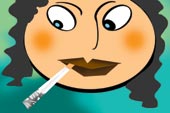
Why do Smoking blacken Lips ???


On smoking nicotine enters into the blood & acts as chemical stimulator to accelerate the process of melanin deposition in skin.This increased quantity of melanin imparts a greyish black hue to the skin.Skin, teeth, gums, nails, lungs get stained too but facial region being more sensitive, the effect is prominent.
THE DAMAGE RENDERED TO THE SKIN DOESN'T REVERT EVEN AFTER QUITTING SMOKING !!!

Wednesday, July 19, 2006

Tomato Vaccine


Genetically modified tomatoes will soon be used to combat HIV and hepatitis B virus (HBV).
The primary objective is to make affordable vaccines that can be easily processed in the countries most affected by the killer viruses.
Researchers at the Siberian Institute of Plant Physiology and Biochemistry in Russia used a soil bacterium to ‘shuttle’ a synthetic combination of HIV and HBV DNA fragments into tomato plants, which in turn manufacture proteins.
When they are eaten, these proteins help the body create antibodies against the viruses.

Say NO to Smoking otherwise...

Tuesday, May 16, 2006


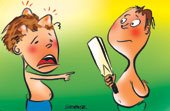
Why does a bump cause a goose egg on the head?
The familiar goose egg forms because of the extremely rich supply of small blood vessels in and under the scalp. When they rupture with even a slight bump and the skin is intact, the blood has no place to go, and the pooled blood pushes outward, sometimes to an alarming degree and forms GOOSE EGG !!!

Target cancer cells
An engineered virus can track down and infect the most common and deadly form of brain cancer, and then kill tumour cells by forcing them to devour themselves, according to researchers at the University of Texas. This virus uses telomerase, an enzyme found in 80 per cent of brain tumours, as a target. Once the virus enters the cell, it needs telomerase to replicate. Normal brain tissue does not have telomerase, so this virus replicates only in cancer cells.

Biogas train


Svensk Biogas of Sweden has unveiled the world’s first biogas-powered passenger train. Fitted with two biogas bus engines, this can carry up to 54 passengers with a velocity of 130 km/h. Biogas, produced by decomposing organic material, emits far less carbon dioxide than traditional fossil fuels. The environment-friendly $1,300,000 train can run for 600 km before it needs to refuel. It may eventually replace diesel or electric trains.

Sunday, March 19, 2006


U think U have lots of work???? Check this...


Don Quixote And Sancho
Brain power
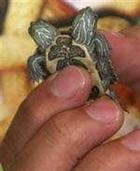
Here’s Don Quixote and Sancho drawing attention once again. Just that this time they are together as a two-headed baby turtle, the left head is called Don Quixote and the right, Sancho. The turtle is proving to be huge draw at an aquarium in Chile. According to its owner, vet Federico Errazuriz, the turtle is normal, apart from the two heads with two brains, and will live up to 15 years.
Fungus fights malaria

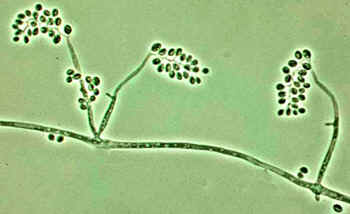
Mould in your house may keep malaria at bay by killing off the mosquitoes which carry the contagion. Researchers at the Imperial College in London found that an oil-based live spore (found in mould) spray could be a viable alternative to the insecticides to which mosquitoes have grown resistant. The fungi have already been successfully used to keep agricultural pests at bay. The oil-based spray of the Beauveria bassiana fungus either kills or maims the mosquitoes so that they can’t spread malaria.
A field study in Tanzania showed that the fungal spray slashed the lifespan of the pests and significantly cut down malaria in the endemic zone. The biggest advantage of the fungal insecticide is its low cost.

Saturday, March 11, 2006

GLOWING PLANTS


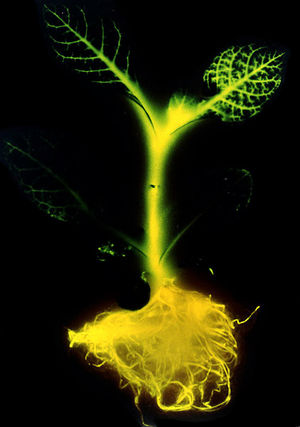
Some people like to talk to their plants. Now, students at Singapore Polytechnic say they have created a plant that can commmunicate with people — by glowing when it needs water.
The students said today that they have genetically modified a plant using a green fluorescent marker gene from jellyfish, so that it “lights up” when it is stressed as a result of dehydration.
The light is hard to detect with the naked eye but can be seen using an optical sensor developed in collaboration with students at Singapore’s Nanyang Technological University.

Thursday, February 23, 2006

Kissing leads to meningitis


Intimate kissing with multiple partners, attending college, and a history of preceding illness are independent risk factors for meningococcal disease in adolescents, a new research shows. However, religious observance and meningococcal vaccination are tied to reduced risks, according to a report in the British Medical Journal. Meningococcal disease — a bacterial infection of the fluid within the tissues surrounding the brain and spinal cord — is largely a disease affecting children younger than five years, although in recent years both the US and UK have seen rising rates among teens, say researchers at the University of London.

Friday, February 17, 2006


Cancer Bite
A fatal cancer afflicting Tasmanian devils passes from one of the small marsupials to another when they bite each other, rather than being transmitted via a virus, according to a team of Australian researchers. The study, reported in the journal Nature, is the first documented instance of trauma-transmitted cancer.

Saturday, January 21, 2006